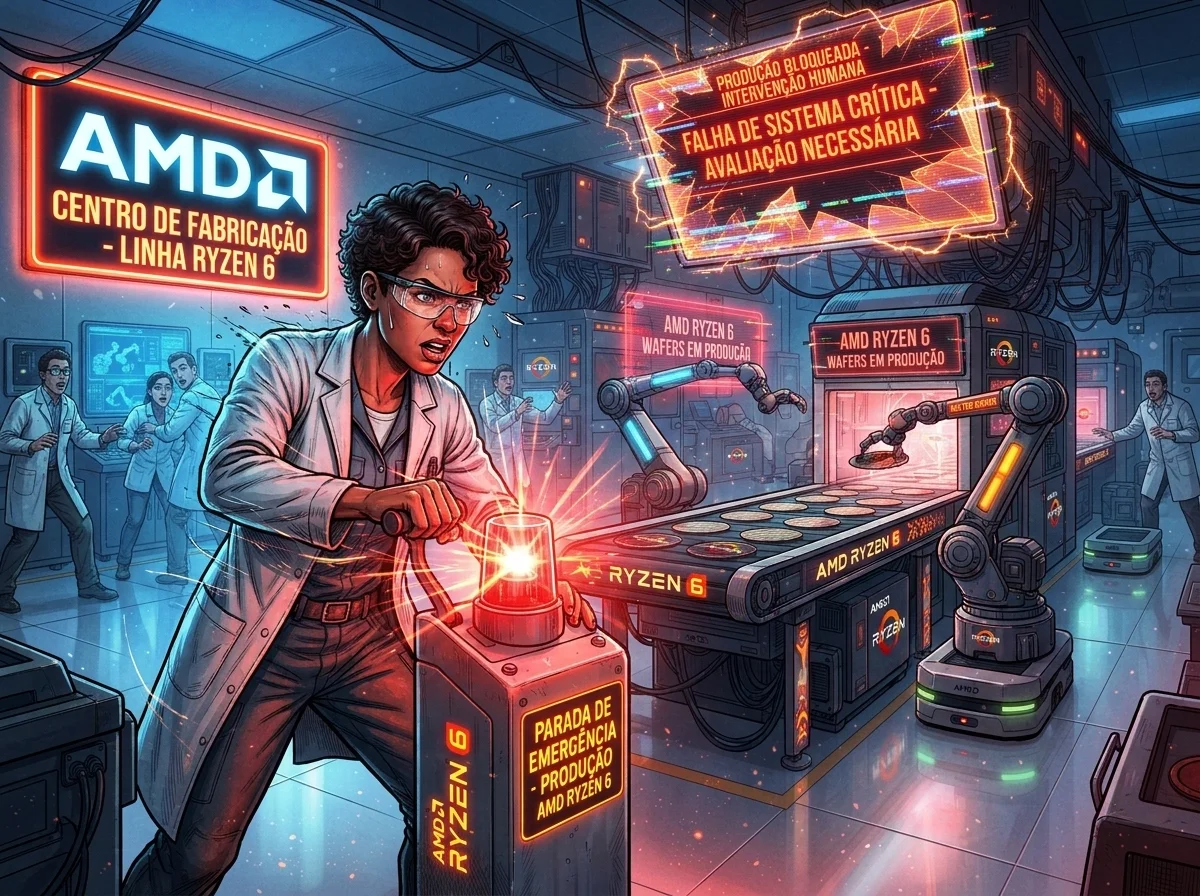
AMD may postpone the Ryzen Zen 6 launch until the second half of 2027
Por Arthur Bittencourt ·
Possible delay in the launch of the Zen 6 chip
AMD's new Zen 6 architecture, which is expected to set new performance standards for the Ryzen line in the coming years, is at risk of not hitting the market within the original timelines expected by enthusiasts and consumers. Information from specialized forums indicates that the desktop processors known as Olympic Ridge may only appear after Computex in June 2027. This scenario changes expectations about when we will see significant leaps in IPC (instructions per cycle), which is essentially the processor's ability to execute basic tasks in a single clock cycle.
This delay creates a significant gap in the technological timeline, allowing other manufacturers to consolidate their market positions before the chip manufacturer's new generation is commercialized. The schedule change forces users who planned to upgrade their setups using this specific technology to reconsider their investments or wait for a much longer period than initially predicted by hardware analysts.
Seeking efficiency in the N2X manufacturing process
The central reason for this possible slowdown is linked to the strategic migration to TSMC's N2X fabrication process. In the semiconductor industry, processes—often referred to as nodes—are like the precision of lines in a drawing: the smaller the lithography used to sculpt transistors onto the silicon, the more components fit into the same physical space. By adopting this more refined technology, AMD aims to achieve higher frequencies and greater power density, seeking to hit impressive benchmarks like 6.5 GHz in the new Ryzen models.
To hit these numbers without compromising thermal stability, the manufacturing infrastructure needs to be mature enough. The focus on N2X production indicates that the company is prioritizing a robust technical delivery over an aggressive release schedule, aiming to overcome the physical limitations found in previous generations that made it difficult to maintain high, consistent speeds while keeping power consumption low.
Fabrication Technology and Performance Gains
Transitioning from the current production standard to the new technological cycle allows for a drastic increase in energy efficiency per transistor. Practically speaking, this means that every component within the chip can process data while consuming less electricity and generating proportionally less heat. This optimization is crucial because increasing the frequency—that is, how fast the computer's core operates—creates severe thermal stress if it is not accompanied by advances in the physical architecture of the materials used in silicon.
By utilizing the latest processes, AMD seeks to balance two often conflicting goals: high raw power (performance) and resource efficiency. A higher transistor density allows information to travel shorter paths within the chip itself, reducing internal latencies and allowing instructions to be completed in smaller fractions of a millisecond, regardless of the complex task executed by the software.
Practical Impact and Longevity of the AM5 Platform
For those who use computers today, this news has two main implications. First, there is the delay of real generational innovations for the new generation; second, there is an important promise regarding the current infrastructure. The expectation is that these new Zen 6 chips will continue to use the AM5 socket already established by the brand. This suggests a longevity strategy where users with modern motherboards can simply upgrade the processor in the future without needing to replace the entire machine setup.
This compatibility maintains a favorable ecosystem for those looking to save money during an upgrade. Instead of facing high costs for new motherboards, consumers can focus solely on swapping out the processing core. However, this requires attention to the technical specifications, because while socket support is likely, not all next-generation models or thermal variants will have guaranteed automatic functionality on existing early-version motherboards.
Competitive risks and uncertainties in future launches
The main risk of this decision is the window of opportunity it gives to its direct competitors. With the AMD delay, companies like Intel could consolidate Nova Lake's dominance before Zen 6 hits the stores. Furthermore, there is the intrinsic technical challenge: high frequency alone doesn't guarantee better performance if the software can't leverage the specific instructions of the new architecture. There are still doubts about which specific segments of these new chips will consistently hit the high clock speed rumored.
Another risk factor is the exclusive dependence on third parties for physical production. If there is any bottleneck in the N2X manufacturing by TSMC—a vital supplier to almost the entire global industry—the brand could be forced to push delivery dates even further for end customers. Semiconductor logistics are complex, and any instability in the wafer supply (the base silicon discs) can turn a minor delay into a prolonged wait with no defined forecast.
Comparison with rivals and the market landscape
The current strategy reflects two distinct philosophies in the tech sector. While some competitors are opting for structural socket changes, requiring complete purchases for new generations, AMD seems to maintain a stronger commitment to its AM5 platform. This creates a scenario where the choice between brands heavily depends on the user's profile: those seeking the absolute latest innovation immediately might end up migrating to platforms that demand a total overhaul, while the durability-focused enthusiast will benefit by waiting for Zen 6 optimizations.
Compared to the Intel roadmap, the technological race has become a game of patience. The goal here isn't just to be first to market, but to deliver an architecture that can survive the new physical limits imposed by the law of thermodynamics at the nanoscale. If the rumors about N2X efficiency are confirmed, Zen 6 could be a major qualitative leap, even if it takes longer to reach physical store shelves.
Next steps and final verdict
The next major developments are expected to emerge during CES in January 2027, a period when official announcements may shed light on the true capabilities of this new era of computing. For now, the market should react cautiously, understanding that this strategy prioritizes technical maturity over commercial hype. For users who need performance now or in the coming months, there is no reason to delay immediate purchases; current hardware already meets contemporary demands for gaming and professional productivity without significant hitches.
If you're planning a long-term build and intend to keep your motherboard for years, it's worth waiting to see how this technological migration will practically affect the power consumption and heat of Ryzen processors when they officially launch. Ideally, you should monitor TSMC's progress with the N2X process before making major investments based solely on high-frequency rumors, because theoretical numbers don't always translate directly into a noticeable gain in FPS or immediate rendering speed.