Marvel's Wolverine: a downgrade that should work better
Por Juca Aranha ·
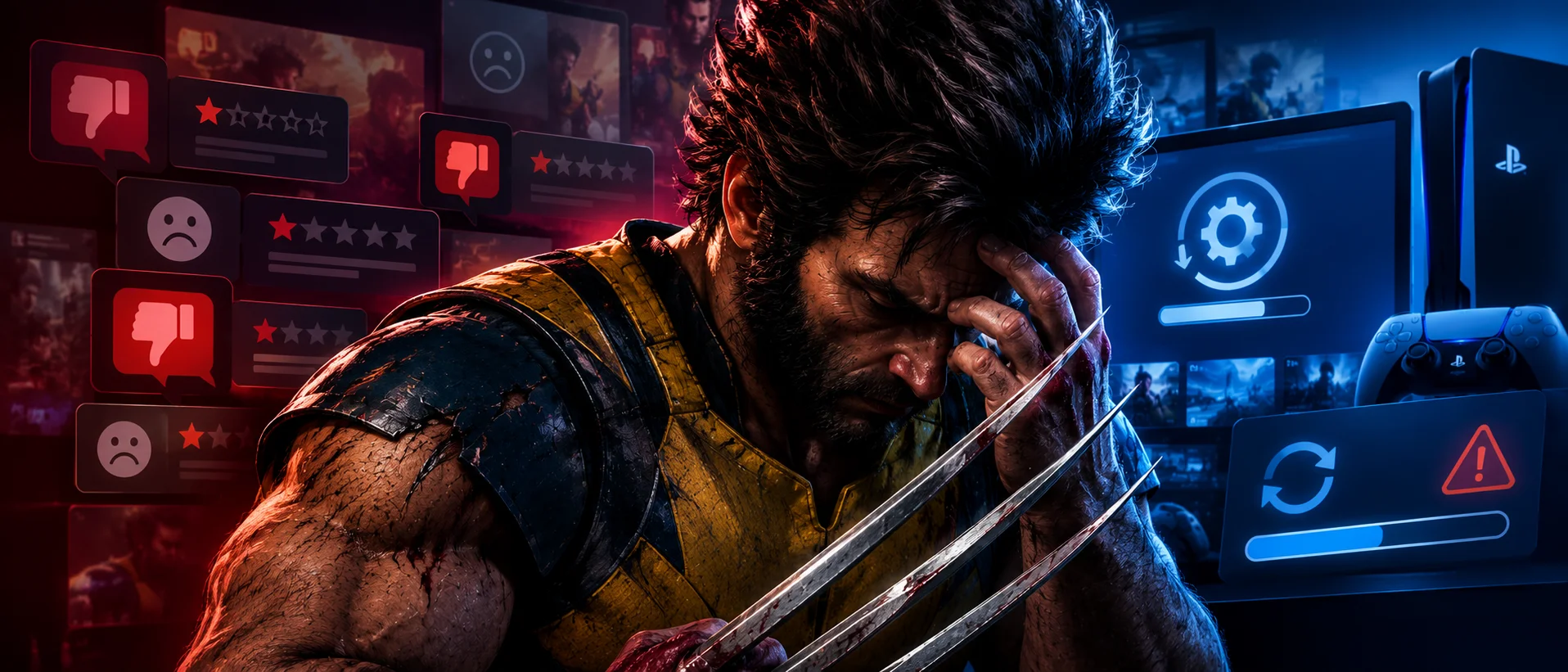
Since the initial announcement, the hype around Marvel’s Wolverine was stratospheric. It was expected that PlayStation Studios would deliver one of the most important and technically flawless titles of the console generation. However, just days after its release, the game has become a focus of intense disappointment and mockery in the gamer community. The title, which promised a visceral dive into the life of mutant Logan, ended up presenting a series of design flaws, mechanical bugs, and, most importantly, a history of updates that, instead of fixing the issues, ended up making them absurdly worse.
The core of the controversy lies in a specific, yet extremely invasive, mechanic: olfactory tracking. Inspired by Logan's sharp sense of smell, the developers incorporated a constant "smell" or "trail" indicator onto the map. Initially, this feature seemed like a fun addition to the character's lore. However, what should have been an element of immersion quickly transformed into one of the biggest obstacles to the gaming experience. Instead of encouraging the player to explore on their own, the colored trail, which points to the most direct path to objectives, completely nullifies the feeling of discovery. The player is forced to follow a straight line drawn by the developer, turning what should be an open universe into an extremely linear and predictable playground.
The Update That Became a Nightmare
The poor user experience didn't stop there. After the launch, the community pressure for improvements was massive. It is in this context that the studio released an update aiming to "mitigate" the impact of this smell mechanic. What was expected was a subtle adjustment, perhaps giving more visibility options or, ideally, a disable button. What was delivered, however, was the opposite of what was desired. Instead of softening or reducing the indicator's presence, it was changed in a way that made it even larger, more noticeable, and more dominant across the entire map scenario. The trail that was once a subtle line now seems to cover large areas of terrain, visually dominating the player's view and reinforcing the feeling that the experience funnel is too tight.
This cycle of promises and failed deliveries has generated a widespread feeling of helplessness among players. It is a vicious cycle where developers receive direct feedback, but instead of making simple adjustments—like offering an on/off switch for the olfactory effect—they implement solutions that only escalate the problem. Many players argue that, in the era of superhero games, the challenge should come from the narrative and gameplay, not from a scent indicator that functions as a mandatory GPS. The result is a game that, despite its visual potential and charismatic cast, suffers from a chronic feeling of being guided at every step.
The Struggle for the Sense of Exploitation
The main design flaw is the disregard for the player's sense of exploration. Open-world games and superhero adventures thrive on mystery and the feeling of "getting lost." The fun comes from uncovering the map, discovering hidden secrets, and making choices about the route to take. By forcing the path through a giant scent trail, Wolverine eliminates the risk of navigation. The player doesn't have to think: "Where should I go now?". The game simply points: "Go here." This, from a critical perspective, degrades the immersion experience. The system ends up being so direct that it devalues the grandeur of the setting and the complexity of Logan's journey.
Beyond the olfactory theme, the game carries other systemic flaws that no update has managed to fix. The structure is frequently criticized for being repetitive, featuring standardized enemies and combat that sometimes loses its depth. The missions and objectives sometimes fail to deliver the expected challenge for a title of this magnitude, and the difficulty itself is seen as inconsistent. It is an accumulation of problems that demonstrates a lack of cohesion and a possible rush during the launch, resulting in superficial fixes rather than a deep restructuring of the experience.
Developer Bureaucracy vs. Player Needs
When faced with the simple request to add an on/off button for the scent mechanic, the developers brought complex technical excuses, citing "interconnected systems" and the need for rigorous testing to avoid introducing bugs in a game with millions of users. However, this rhetoric echoed a feeling of disconnection from the player's reality. It was as if controlling a simple visual effect were an engineering challenge requiring the calculation of millions of variables. It is a narrative that seems more concerned with protecting the development schedule than ensuring the user's quality of life. Players simply ask for a button, and the response is a wall of technical jargon and risk claims.
It is fascinating to observe the level of detail developers try to justify the persistence of bugs. It seemed like the complexity of the olfactory tracking system was greater than the complexity of adding a simple toggle in the code. The focus on "not disrupting the flow" obscured the most obvious fact: that the visual effect alone is enough to ruin the experience. The general feeling is that the game is a classic example of poor product management, where technological ambition superseded design sense and respect for the player.
Conclusion: A Case Lost in Potential
The artistic and narrative potential of Wolverine is undeniable, and that is why the frustration is so palpable. The project has elements that deserve a standing ovation, but the combination of mechanical flaws, coupled with terrible post-launch support communication, has created the impression of deplorable service. The gamer community is calling for a total "reset," not just a color adjustment to the scent trail. Players expect the developers to reconsider the approach to a game that, in essence, needs a complete overhaul, starting from scratch. For now, Marvel’s Wolverine remains a reminder of how hype alone is not enough to sustain a title if the execution and user support are so far apart.
The result is a product that is more a collection of regrets than an epic superhero adventure. It is a case study on how excessive resources and lack of focus can lead to industrial-scale disappointment. The question remains: will there be some kind of real intervention, or will Wolverine be relegated to the category of "a big disappointment playable only because of the memes"? Expectations remain high, but the erosion of trust between the studio and the public is very evident.