Modder adapts PS5 Pro in a case with liquid cooling
Por Arthur Bittencourt ·
The project of extreme hardware modification
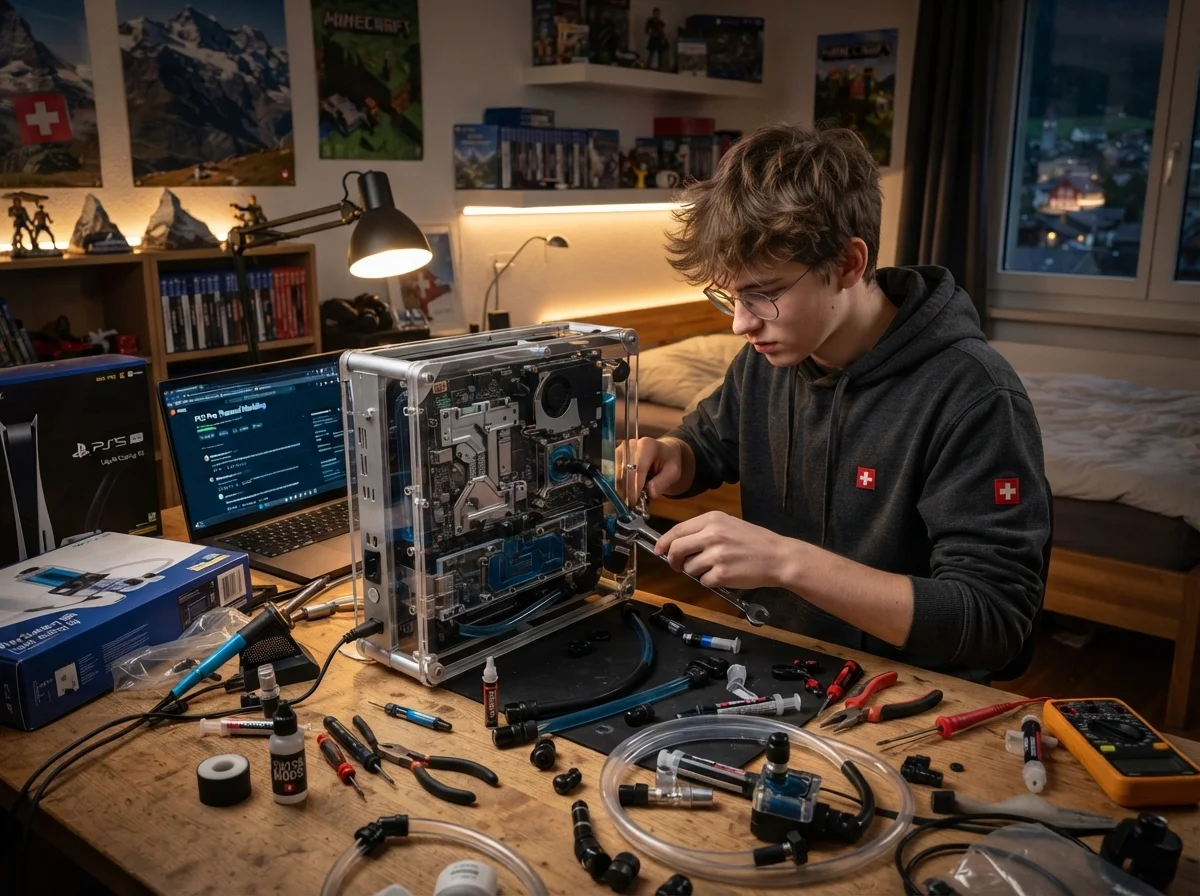
A Swiss enthusiast decided to push the concept of physical optimization to the limit by integrating a PlayStation 5 Pro into a high-performance external structure. Unlike simply swapping internal components, the modification author rebuilt the entire gaming console's operating environment using typical elite desktop computer parts.
The build uses a Phanteks XT V3 case equipped with a compact NZXT power supply and a massive 360mm Lian-Li Hydroshift II liquid cooling system. The main goal was to transform the Sony console experience into something that physically behaves like a powerful gaming PC, while keeping the original software core intact.
Thermal and acoustic challenges of the PS5 Pro
This deep intervention is motivated by the physical limitations of home consoles when operating at maximum capacity. Many users report that devices like the PlayStation 5 can generate intense noise or show signs of overheating due to accumulated dust or the high graphical demands of modern titles.
To mitigate these problems, the designer opted to replace traditional airflow with circulating water through tubes—a technique known as liquid cooling. This method allows heat to be removed from the internal components much more efficiently and quietly, ensuring thermal stability even during long sessions of extremely demanding games without compromising the peace of the home environment.
Technical adaptations and custom engineering
The complex part of this project involved severe modifications to the electrical power supply to make the two technologies communicate with each other. Since the console does not use standard ATX connections, the modder had to solder adapted PCIe connectors to supply the necessary 12V directly to the video game's main board circuits.
He also replicated a common technical trick in computer builds by connecting the case's power button to the corresponding pins inside the console. Furthermore, several exclusive parts were produced via 3D printing to serve as structural support and fix the thermal blocks. The system was adjusted via PWM, a technology similar to a lamp dimmer that controls energy intensity, allowing for precise management of the speed of the water pumps and the installed Jonsbo fans.
Complexity versus practical benefit
Although the modification results in visually impressive and thermally stable hardware, it represents an extreme challenge for any average user. The process required about 120 hours of work due to the author's lack of prior experience with 3D printing, resulting in significant additional costs beyond the original value of the PlayStation 5 Pro itself.
In practice, this solution functions as a demonstration of niche engineering aimed only at enthusiasts dedicated to deep electronic customization. For those seeking performance without technical complications or exorbitant expenses, native solutions and periodic cleaning continue to be the standard path; this is a technical display project superior to daily domestic use.