New phase of Unreal Engine 6 eliminates Blueprints and focuses on AI
Por Arthur Bittencourt ·
Changes to the fundamental pillars of Unreal Engine 6
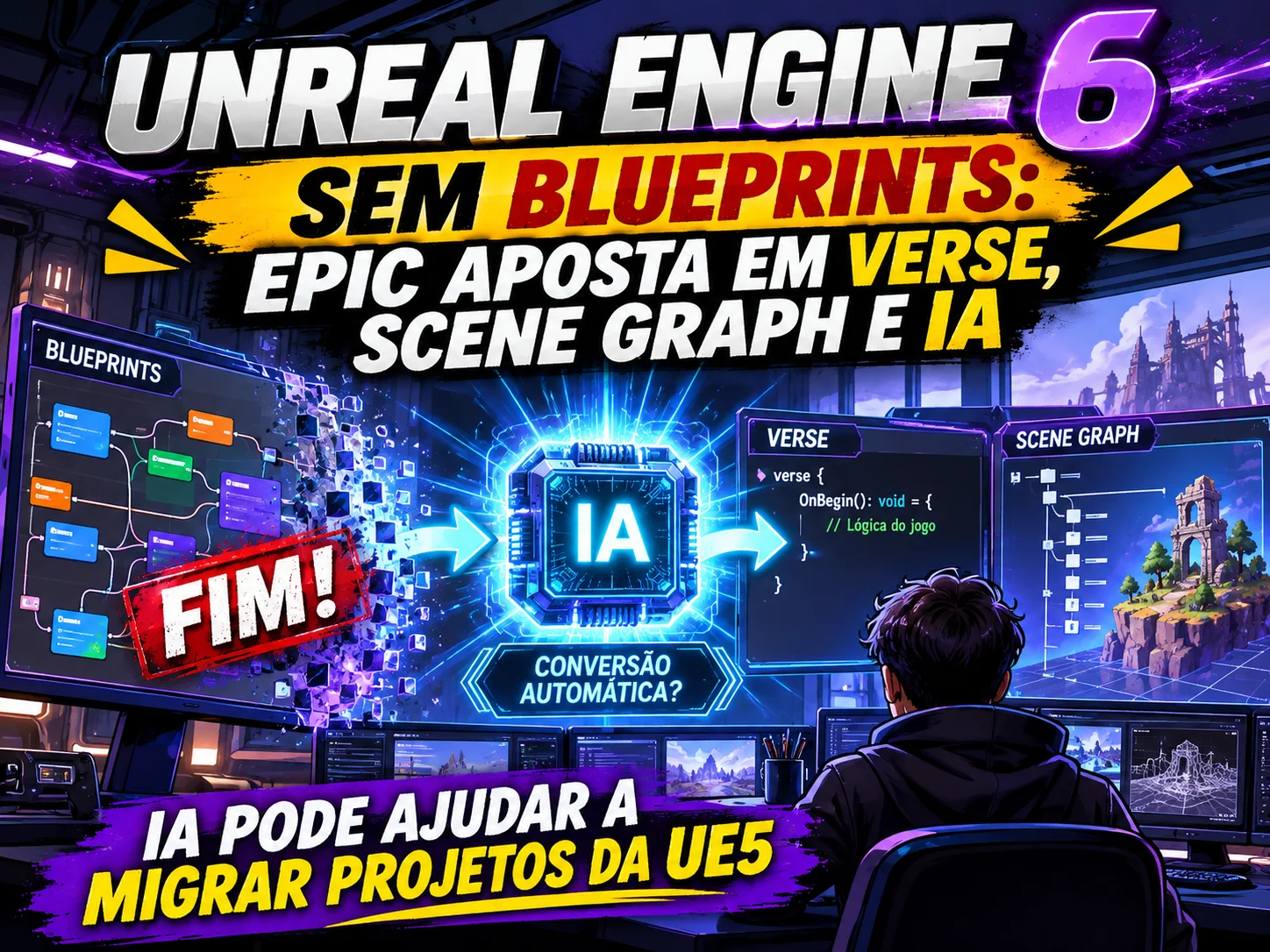
Epic Games announced a significant adjustment to the architecture planned for the next generation of its graphics engine, Unreal Engine 6. The company decided that the Blueprints and Actor Gameplay tools will not be included in the new version as previously planned.
These systems are essential because they facilitate the visual creation of game logic, allowing many creators to build complex mechanics without having to deal directly with rigid manual programming syntax through line-by-line code.
Now, Epic plans to replace these traditional features with the Verse language and the Scene Graph system. This transition marks a profound change in how the engine handles world building and character interactions within productions.
The strategic role of artificial intelligence in conversion
The central reason for this decision lies in the expressive advancement of generative artificial intelligence technology capabilities. Initially, Epic intended to keep the old frameworks coexisting with the new during an adaptation period to facilitate the gradual migration of projects.
However, the current ability of machines to convert large blocks of data suggests that this process can be almost entirely automated by the software's own algorithms. By betting on this automation, the company expects to deliver Unreal Engine 6 with greater technical agility and structural fluidity.
The idea is to use advanced models to logically translate the architecture of existing Blueprints to the new Verse-based infrastructure. This allows developers not to have to rewrite everything manually, but instead to use intelligent tools that identify and adapt the rules applied in the original files.
Practical examples and the direct technical impact
To validate this strategy, Epic presented results obtained using its flagship title, Fortnite. In tests conducted by the company, they managed to port over 20,000 Blueprints into about three million lines of code in the new language using AI technology.
This data serves as a proof of concept: if a library as vast as that of a global success can be transmuted by machines, smaller studios can also take advantage of similar facilities when updating their future titles without excessive human costs during the technological migration.
Market trends and future perspectives
In practice, this means that the focus of production will gradually shift from the manual manipulation of visual logic nodes to systems focused on modularity and computational intelligence. While the costs of tasks executed by automation algorithms continue to fall exponentially every year, the technical complexity of development remains stable.
This trend favors a workflow where the tool itself handles the heavy translation between engine versions. For those working in game development, the ideal is to start familiarizing yourself with Verse's capabilities now, preparing for a scenario where the conversion between technologies will be mediated primarily by automated processes.