NVIDIA reinstates JENSEN HUANG as CEO and company shares SKYROCKET
Por Rafa Quintela ·
Official reinstatement of Jensen Huang to leadership
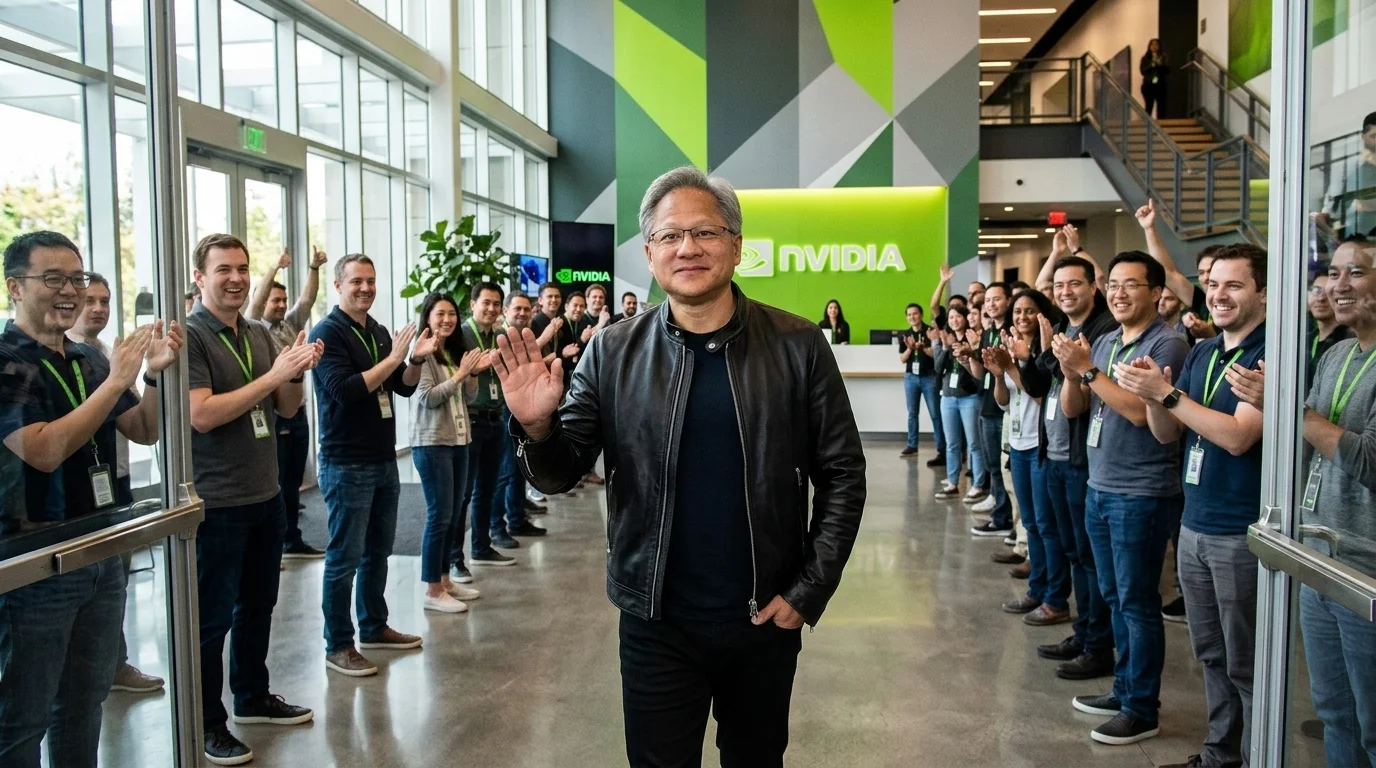
Nvidia's board of directors took a unanimous decision to reappoint Jensen Huang to his previous role as president and chief executive of the company. This move occurred after a period of uncertainty involving foreign intelligence suspicions and possible leaks to Chinese entities. The new appointment was validated by the analysis of American governmental authorities, who concluded that Huang's continued presence does not pose a risk to U.S. national security.
During the hiatus while he was away, the company's shares suffered sharp declines due to investor fears regarding the brand's strategic continuity. Huang's return was met with optimism by the financial sector, as he is considered a crucial element for the company's technical vision. According to official statements, the choice aims to protect the best interests of shareholders and partners, ensuring that the organization's technological infrastructure continues under a leadership already consolidated in the market.
Immediate impact on stock exchanges and market context
The news instantly impacted financial markets, causing a jump of approximately 33% in Nvidia shares in a short period. This movement served as a palliative for the generalized pessimism surrounding the so-called AI bubble. A "bubble" occurs when a technology's market value rises much faster than its practical utility or ability to generate real profit, acting like a balloon that can burst if there is excessive enthusiasm without solid foundations.
Although this recovery brought temporary relief to indices like the Nasdaq, experts point out that the structural problem of exaggerated valuations in the industry still persists. The sudden rise signals that market confidence is strongly linked to Jensen Huang's personal figure and the stability of internal management. On the other hand, other industry giants are adopting defensive postures; rumors indicate that companies like Google have started severe cost cuts and hiring freezes, suggesting preparation for possible future economic adjustments.
Internal security and oversight mechanisms
To mitigate risks associated with previous investigations, Nvidia established independent company committees composed of directors to monitor potential data breaches. Furthermore, a specific committee was created for export control and national security. These bodies are tasked with supervising the sensitive technologies produced by the company, ensuring they are not diverted for hostile purposes while maintaining active commercial operations on a global scale.
These measures serve both to reassure regulators and to protect the organization's intellectual property against external sabotage. By separating executive leadership from the new layers of security auditing, Nvidia attempts to demonstrate that it can maintain its innovation without compromising national protocols. However, this complex structure brings new logistical challenges, as every new technology launched will now pass through rigorous filters before reaching specific consumers or external markets.
Future outlook on the investment cycle
In the short term, Jensen Huang's return appears to have interrupted the downward trajectory of stock prices, but the sustainability of the artificial intelligence sector remains an open question. The market must observe whether this movement was merely a temporary patch to Nvidia's valuation or if the company's technological foundation can sustain these price levels without external aid. The current trend indicates that large corporations are seeking greater financial efficiency given the high expenditure on specialized hardware.
For those who follow the sector, the scenario calls for caution and attention to the coming fiscal quarters, especially regarding the behavior of giants like Google and Microsoft. If the market begins to demand more immediate profits instead of future promises of AI productivity, the optimism generated today could quickly weaken. For now, the priority is to wait and see if the implemented security measures will be sufficient to maintain the company's operational stability amid global scrutiny.