The performance of Anthropics' IPO and the risk of an AI bubble
Por Rafa Quintela ·
The Numbers Behind Anthropic's Launch
Anthropic's recent entry into the capital markets came in with record-breaking figures, with the company being valued at approximately A recente entrada da Anthropic no mercado de capitais foi marcada por cifras recordes, com a empresa sendo avaliada em aproximadamente 1,5 trilhão de dólares. Esse montante a posicionou como o maior IPO da história dos Estados Unidos, superando até mesmo marcos anteriores da SpaceX. No entanto, apesar das celebrações imediatas pelo volume de capital atraído, a dinâmica de preços durante o primeiro dia de negociação revelou nuances que podem não ser tão otimistas quanto a cobertura midiática inicial sugere..5 trillion. This amount positioned it as the largest IPO in US history, surpassing even previous milestones set by SpaceX. However, despite the immediate celebrations over the massive capital attracted, the price dynamics during the first day of trading revealed nuances that might not be as optimistic as the initial media hype suggests.
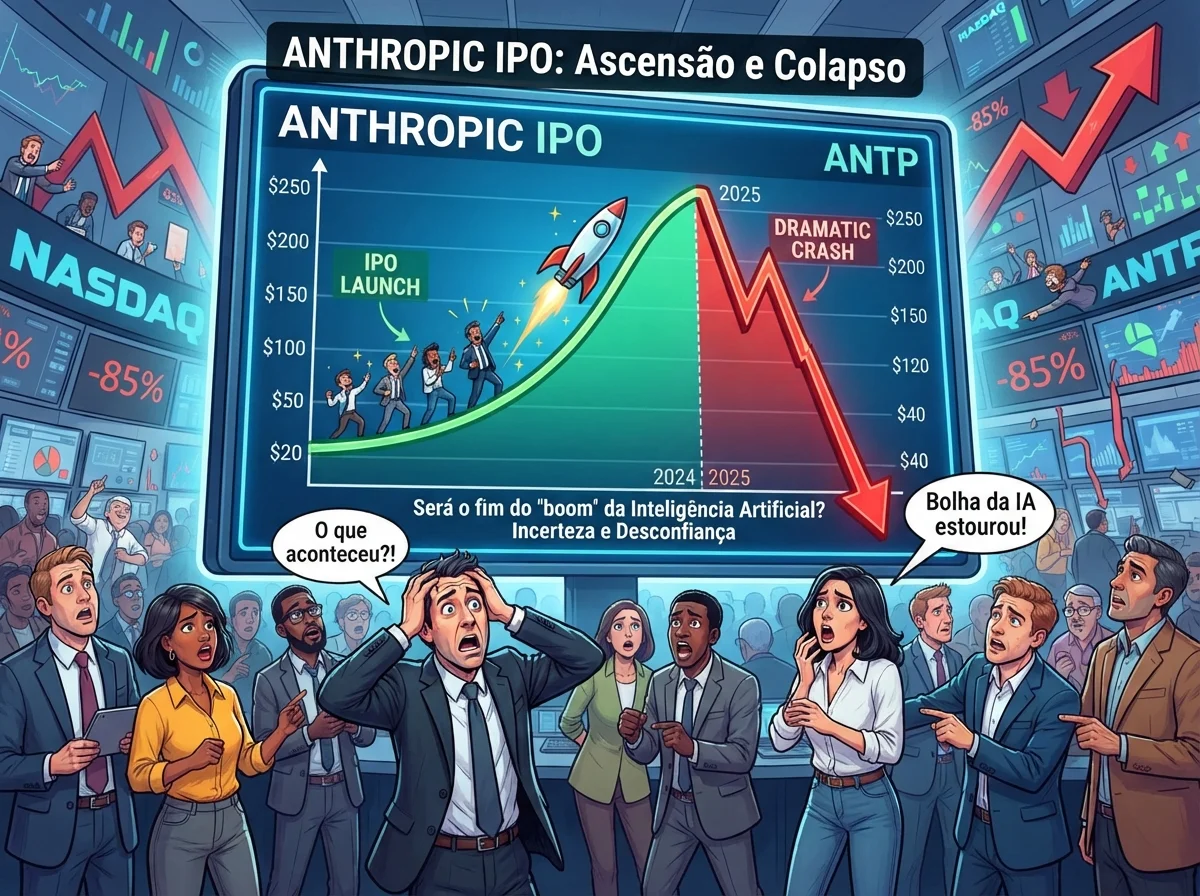
The stock began trading at a level of around 110 dollars, after initially being established in a lower indicative range, near 83 dollars. Although the value remained above this basic floor, it suffered rapid selling pressure and closed the day close to the 97 dollar mark. For those analyzing market behavior, this movement is relevant because it indicates that, while there was sufficient interest to open trading on the upside, there was not enough robust demand to sustain the maximum price reached right at the opening.
The Role of Institutional Investors in Maintaining the Hype
A fundamental point to understanding these numbers is the composition of the buyers. It was observed that a large portion of the shares was acquired by institutional investors—large funds, banks, and corporations like Microsoft and Nvidia—rather than small individual retail investors. These major players have different strategic interests: they seek to ensure the stability of the technological infrastructure and prevent sudden collapses that would harm their own portfolios and operations.
This buying concentration can be interpreted as an attempt to stabilize the price structure and prevent a "bubble burst." A bubble occurs when an asset's price drastically detaches from its real value, based on profit or practical utility; it works like a party balloon that inflates only with hot air until it reaches a physical limit where the internal pressure exceeds the material's resistance. In the case of AI, the fear is that current valuations depend exclusively on the future expectation of infinite growth, without a solid foundation of present profitability.
The technical logic of comparative price movement
To assess the health of this IPO, you need to look beyond just comparing the initial and final price. In successful launches, the stock is expected to rise after the opening and only gradually drop as new buyers queue up. The fact that Anthropic peaked sharply at the beginning and then declined suggests a lack of immediate buying momentum. If there was as much pent-up demand as the optimists claimed, the market should have pushed the value even higher before any significant pullback.
Comparing this scenario to the SpaceX launch, the difference is clear. In that case, even after initial fluctuations, the stock price consistently remained above the original trading value during its debut period. Antropic's trajectory was the opposite: it quickly gave way to the first offering test. This signals a feeling of caution or investor fatigue, suggesting that the excessive enthusiasm for the sector is running into practical barriers in economic valuation.
Systemic Risks: The Impact on Emerging Markets
The impact of this possible correction is not limited only to the United States. There is a deep interconnectedness in global technology investments. When giant companies like Nvidia actively participate in these cross-investment cycles—funding those who buy their chips while these same companies buy their stocks—a feedback loop is created that can artificially inflate prices. If this structure loses support and a sharp correction occurs in the Nasdaq index, the cascading effect could be severe for economies dependent on foreign capital.
For countries like Brazil, these moments are particularly sensitive. During periods of international financial instability caused by the bursting of tech bubbles, there is a natural tendency for capital flight into assets considered safer in other jurisdictions. If confidence in artificial intelligence wavers and large amounts of investment are withdrawn from the global market, liquidity in emerging markets tends to dry up quickly. Therefore, it is essential to monitor not only the individual success of Anthropic, but also the stability of the capital flow that sustains this technologically advanced sector.
Verdict: cautious optimism or a warning sign?
Despite impressive valuation numbers, technical indicators suggest that the AI's 'unbridled growth' phase might be hitting its speculative ceiling. This isn't about predicting the end of the technology, but rather recognizing that companies might face a period of consolidation where inflated valuations will be adjusted by economic reality. For now, the scenario demands attention: initial enthusiasm was high, but long-term sustainability will depend on tangible results, not just historical headlines about astronomical IPOs. The ideal move now is to observe the resilience of these prices over the next few months before making any strategic decisions based purely on current hype.