Phison presents SSD concept with its own hardware for artificial intelligence
Por Arthur Bittencourt ·
The integration of artificial intelligence into storage drives
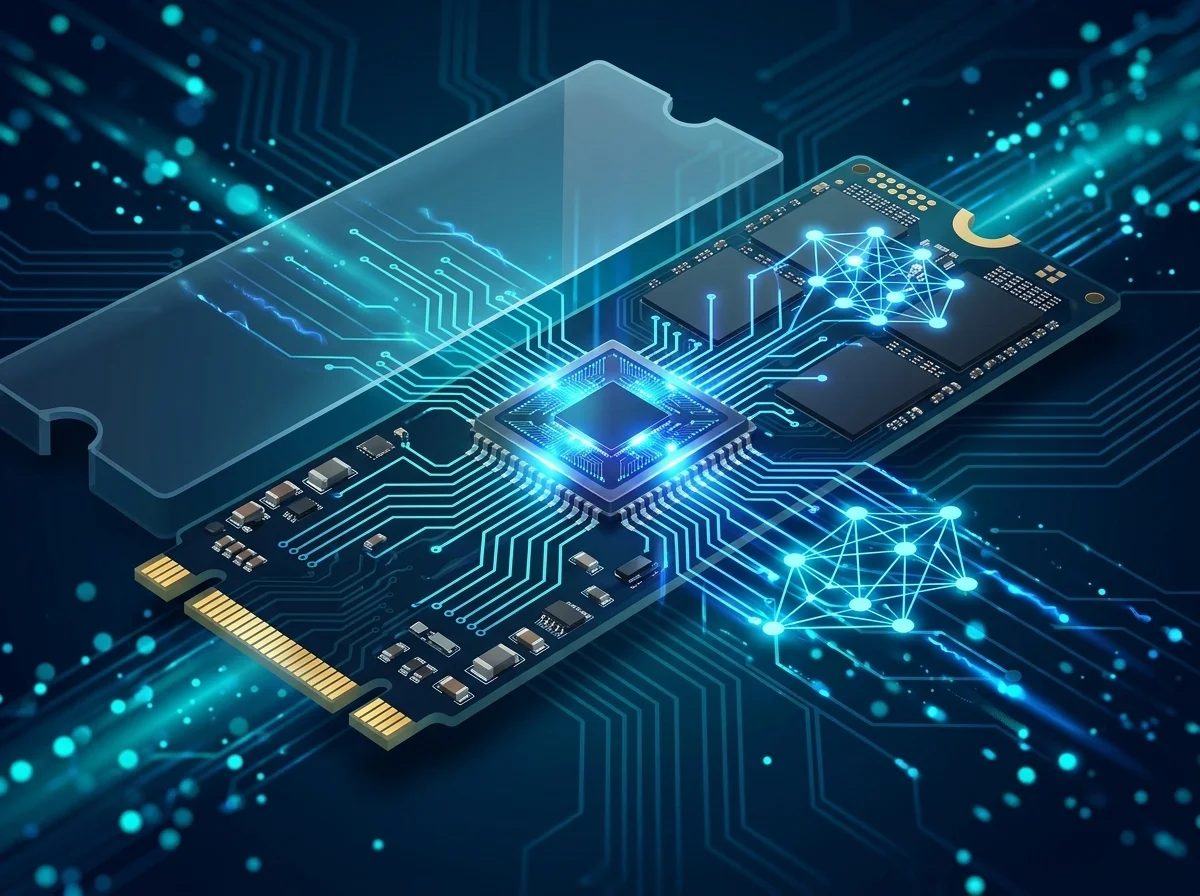
During the Supercomputing 2026 (SC26) event, Phison presented an innovative concept for solid-state flash storage devices (SSD). The project involves incorporating a Neural Processing Unit (NPU) within the drive's internal structure. An NPU is an electronic component specialized in performing complex mathematical calculations required for neural networks—like a "brain" dedicated solely to machine learning logic.
The main goal of this architecture is to allow parts of the data requested by the CPU and GPU for AI inferences to exit the drive already processed. Instead of merely acting as a passive file repository, the SSD begins to function as an active processing point. The company used models known in the software market, such as PyTorch and llama.cpp, to demonstrate this initial capability in a 64GB prototype.
Reducing the bottleneck in the movement of large volumes of data
Currently, high-performance systems face limitations when they need to move massive amounts of information between different physical components for immediate analysis. By performing part of this work directly on the storage hardware, Phison states that the unnecessary movement of data can be reduced by up to a hundred times, depending on system compatibility. This scenario creates a direct relief on the computer's core resources.
This change positively impacts the central units (CPU) and the video cards (GPU), as they will not need to handle the raw traffic of pre-processed information. The device performs a kind of intelligent "filtering": it receives the request and delivers only the necessary result to the remaining components, optimizing energy efficiency and accelerating the response of the overall system during heavy artificial intelligence tasks.
Technical architecture and support for industrial frameworks
To sustain this internal operation without compromising speed, the company designed a memory bandwidth dedicated to the internal NPU of up to 130 GB/s. For technical context, this rate considerably exceeds what is expected from the brand's future PCIe 6.0 controller for communication between the drive and the motherboard. This high speed ensures that the local processing occurs almost instantaneously before the data leaves the drive.
Phison plans to offer support for industry-established software standards, such as vLLM and OpenVINO. The inclusion of these frameworks aims to facilitate the adaptation of this technology in professional servers that already possess ready infrastructure. Although initial figures still use traditional performance metrics—such as DMIPS (millions of instructions per second)—the proposal signals a clear focus on hardware autonomy in the face of new demands for fast AI.
Realistic expectations and the current stage of innovation
While promising, it is essential to understand that this project is currently in the conceptual prototype stage presented to the market. To date, there are no defined commercial names or specific launch windows for samples to partner manufacturers. The lack of detailed data on modern performance suggests that the company is prioritizing technological validation and commercial interest before starting a definitive production line.
For enthusiasts and general users, this means that this structural change in SSDs will likely take a few years to reach physical stores at affordable prices. For now, the initiative primarily serves to demonstrate how the internal component architecture can evolve to keep pace with the needs of modern neural networks. It is recommended to wait for official announcements regarding final products to assess whether this increase in internal computing power brings perceptible gains in daily use