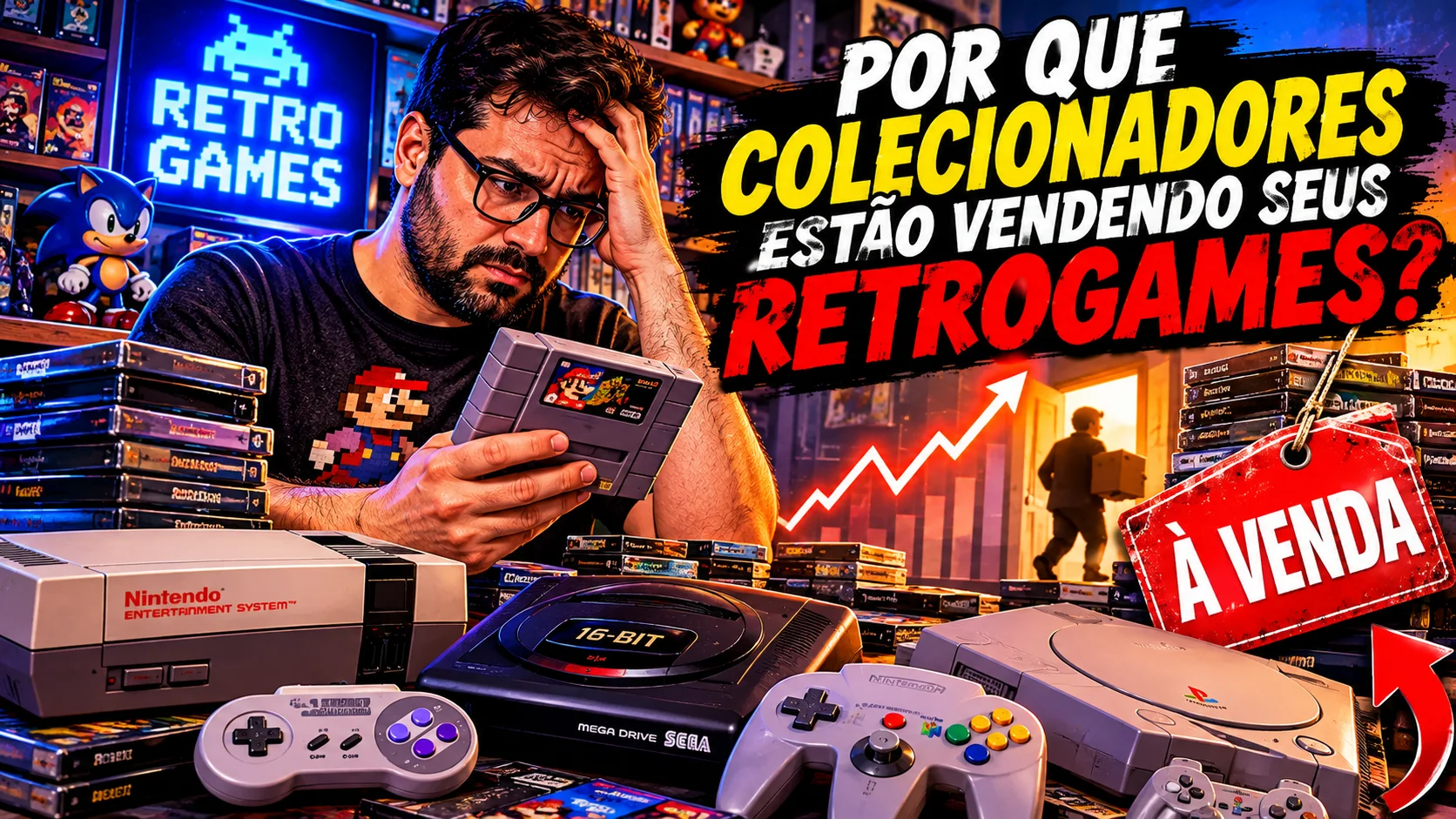
Why are collectors selling their retro games?
Por Juca Aranha ·
The natural cycle of the retro market
Many enthusiasts have noticed a recent shift in the classic video game niche: items previously considered extremely rare have started appearing more frequently on shelves and in sales listings. This doesn't necessarily signal the end of interest in the hobby, but rather a cyclical phenomenon where collections constantly change hands as new opportunities arise for active buyers.
Goals achieved and personal changes
One of the central reasons involves the completion of the collection goal itself. For many owners, the peak was the hunting journey; once they manage to assemble complete sets or achieve specific objectives, the motivation decreases, and they choose to pass on the items. Furthermore, external factors like new family projects or immediate financial needs cause some to need to liquidate part of their collection to sustain other important phases of life.
Curation in the face of high entry costs
With high prices, the current trend is the professionalization of acquisitions. Collectors are prioritizing quality over quantity, often selling duplicate units to finance rare and specific pieces in pristine condition. This movement shows that liking old games doesn't require accumulating everything, but rather maintaining a strategic curation that makes sense both in the physical space and in the user's emotional connection to the devices.
The constant renewal of the audience
Although the entry barrier for those starting now is prohibitive, this keeps the sector alive and healthy. Every item sold represents only a closed chapter for a previous owner and the beginning of another story for a new enthusiast. Collecting breathes and adapts to time, ensuring the wheel keeps turning while new generations discover the historical value of classic consoles.