Forecast points to a drop in RAM memory prices starting in 2027
Por Arthur Bittencourt ·
Scenarios for the hardware market
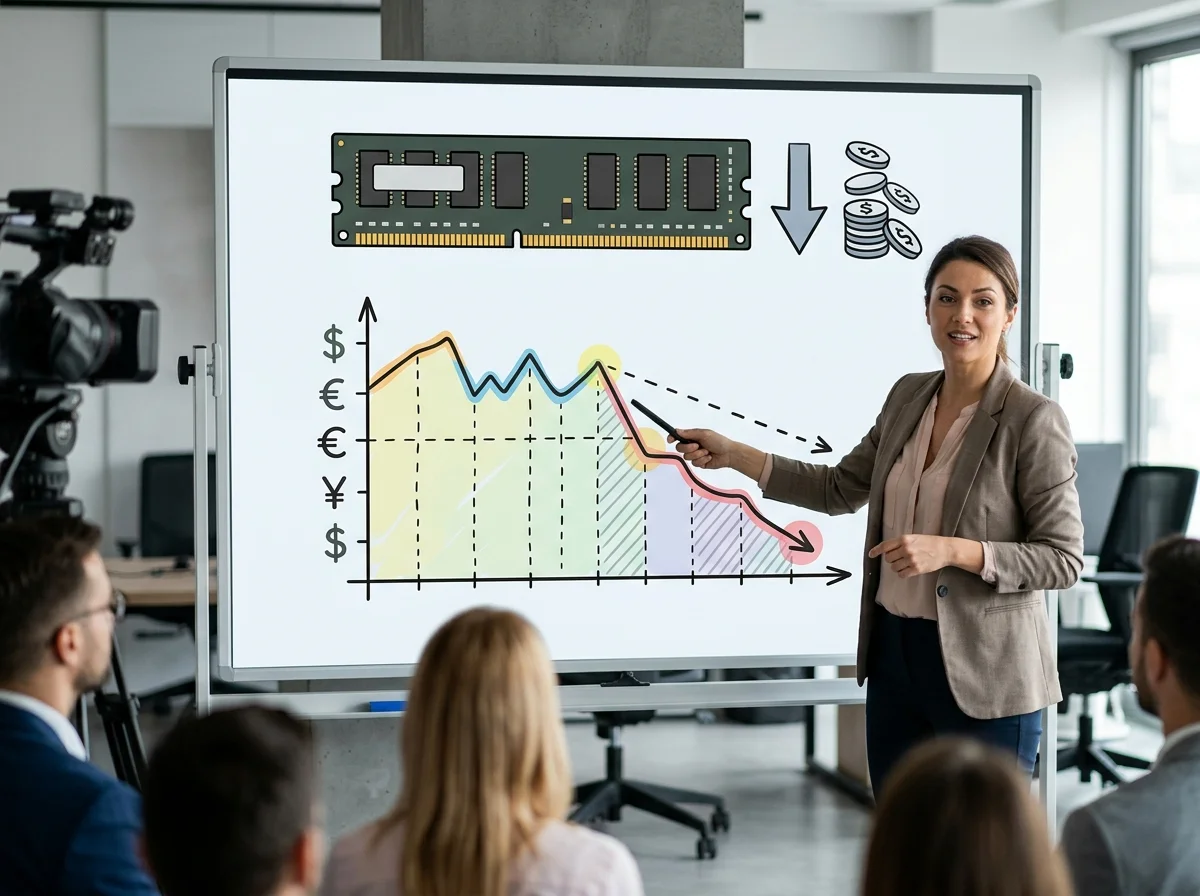
The Taiwanese consultancy TrendForce released a detailed analysis on semiconductor market trends, indicating possible cost relief for DRAM (Dynamic Random Access Memory). According to the research, the company works with two main projections: in the base scenario, price increases would progressively decrease throughout 2027, leading to stabilization in the second half and the start of a decline in the first quarter of 2028.
On the other hand, there is an even more optimistic perspective for those seeking cheaper components. If global demand for chips decreases rapidly, price drops could begin as early as the fourth quarter of 2027, presenting more significant reductions throughout the following year. This view diverges from statements by some traditional manufacturers who suggest maintaining high prices until 2028 or beyond, highlighting a narrative battle between independent analysts and major industry producers.
The impact of the artificial intelligence boom
To understand why prices are so high now, we must look at the current artificial intelligence phenomenon. The market has faced a severe production bottleneck because companies worldwide need massive quantities of fast memory to power complex servers. It's like having a huge line in front of a small factory; when everyone wants to buy at the same time, the stock runs out, and the value rises quickly due to technical scarcity.
Recently, this pressure has begun to show signs of weakness. Chinese cloud service providers have already started reducing their memory orders for servers after successive price adjustments hurt global electronics sales. Although North American giants still absorb part of this supply, the general weakening of demand given the high costs suggests that the most critical phase of the supply and demand imbalance may be coming to an end in the coming years.
Industrial expansion and new processes
The predicted drop does not just depend on market sentiment, but also on technical advances in global production. The commissioning of new specialized factories should significantly expand global manufacturing capacity by 2028. Furthermore, adopting more modern manufacturing processes allows for the production of components with greater efficiency, increasing the quantity available in the international market without compromising the technological quality of the produced memories.
Other macroeconomic factors also weigh on this balance. Stricter restrictions on the export of specific artificial intelligence chips can redirect trade flows, while a reduction in funding for small data center operators decreases pressure on manufacturers. This set of variables favors an environment where large-scale production can finally meet or exceed the immediate consumption needs of major technology providers.
What to expect for buyers
Although the forecasts bring hope, the end consumer needs to be patient before planning purchases based on these numbers. There is a considerable gap between the price negotiated by large industries—such as servers and data centers—and the value practiced in retail stores. It is common for deep changes in industrial contracts to take several months to be reflected on the shelves, since the logistics chain involves various layers of distribution.
If you are thinking about building a new computer or upgrading your current setup, the scenario indicates that waiting until the end of 2027 might be a smart strategy to get better conditions. There are no guarantees that prices will return exactly to pre-crisis levels, but the trend points toward a relief in the global hardware budget. Monitoring these reports is essential to understand whether it is worth performing the upgrade now or holding the investment for a few more months.