Rockstar reveals GTA 6 resolution and graphics tech for consoles
Por Juca Aranha ·
Performance and Graphics Balance
Rockstar Games has revealed the technical details on how it plans to deliver the epic GTA 6 experience on current-gen consoles. The developers' central focus was maintaining a stable 30 FPS framerate across all platforms to ensure that the visual density and complexity of Leonida's open world do not compromise gameplay fluidity. Although the target is 30 frames per second, the team assures that the input responsiveness will be significantly more refined than what we saw in the RAGE engine during Red Dead Redemption 2 or GTA 5.
Resolution Strategies by Platform
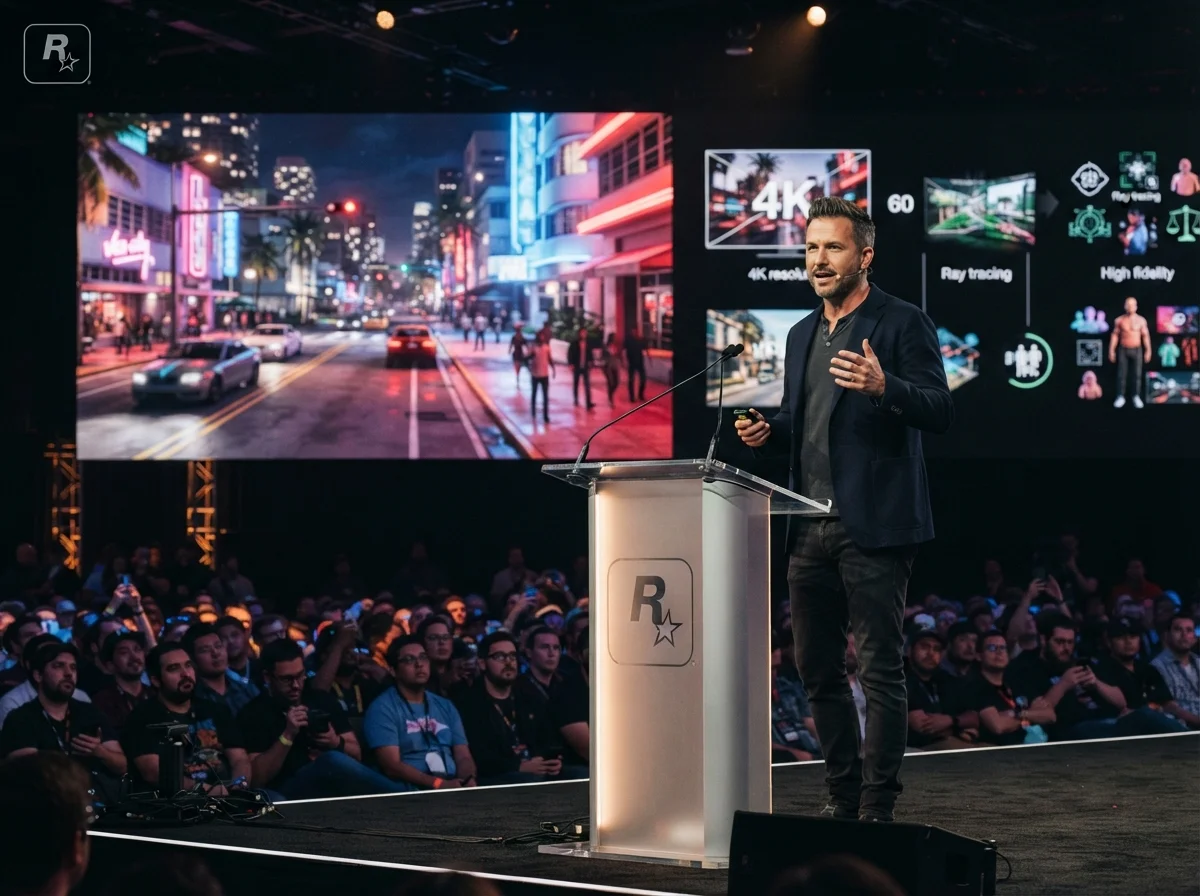
To handle the massive graphical demands of the new title, each console received a specific rendering strategy. On the PS5 and Xbox Series X, the game is processed internally at 1440p before being upscaled to 4K using the company's proprietary temporal technology. For those running the PS5 Pro, they can rely on Sony's PSSR2 to reconstruct this image with greater sharpness. For the less powerful hardware of the Xbox Series S, the solution involves starting from a 720p base and utilizing an implementation of AMD FSR 4 to reach the 1080p mark on the final screen.
An important detail is that the entire user interface is already rendered in 4K before it reaches the player. This ensures that menus and HUD elements remain crisp, even when the main scene is being upscaled. Rockstar made these technical choices to balance the memory load and ensure that the open world doesn't lose important details in extremely populated areas.
Ray tracing and extreme visual fidelity
One of the major updates confirmed by the technical team is that all consoles will feature ray tracing global illumination. Even on the Xbox Series S, the developer managed to adapt this feature while respecting the device's severe memory limitations. Furthermore, a robust material library has been created that defines how every surface interacts with light—from the realistic texture of skin and hair to the glow of the neon signs characteristic of Vice City. The system also incorporates real cinematic techniques, featuring native support for HDR and SDR right from the start of development.
There were also clarifications regarding intentional aesthetic choices, such as the vignette effect on the image edges, which is part of the deliberate art direction and cannot be disabled by the user. As for the appearance of the protagonist Jason, he may look different between promotional trailers and the final game simply due to the high level of customization available. The promotional artwork is just one example of a specific configuration, while the in-game version allows for various visual changes that vary depending on the player's choice.