SpaceX gets authorization to launch a million AI satellites
Por Arthur Bittencourt ·
Federal license for data infrastructure in orbit
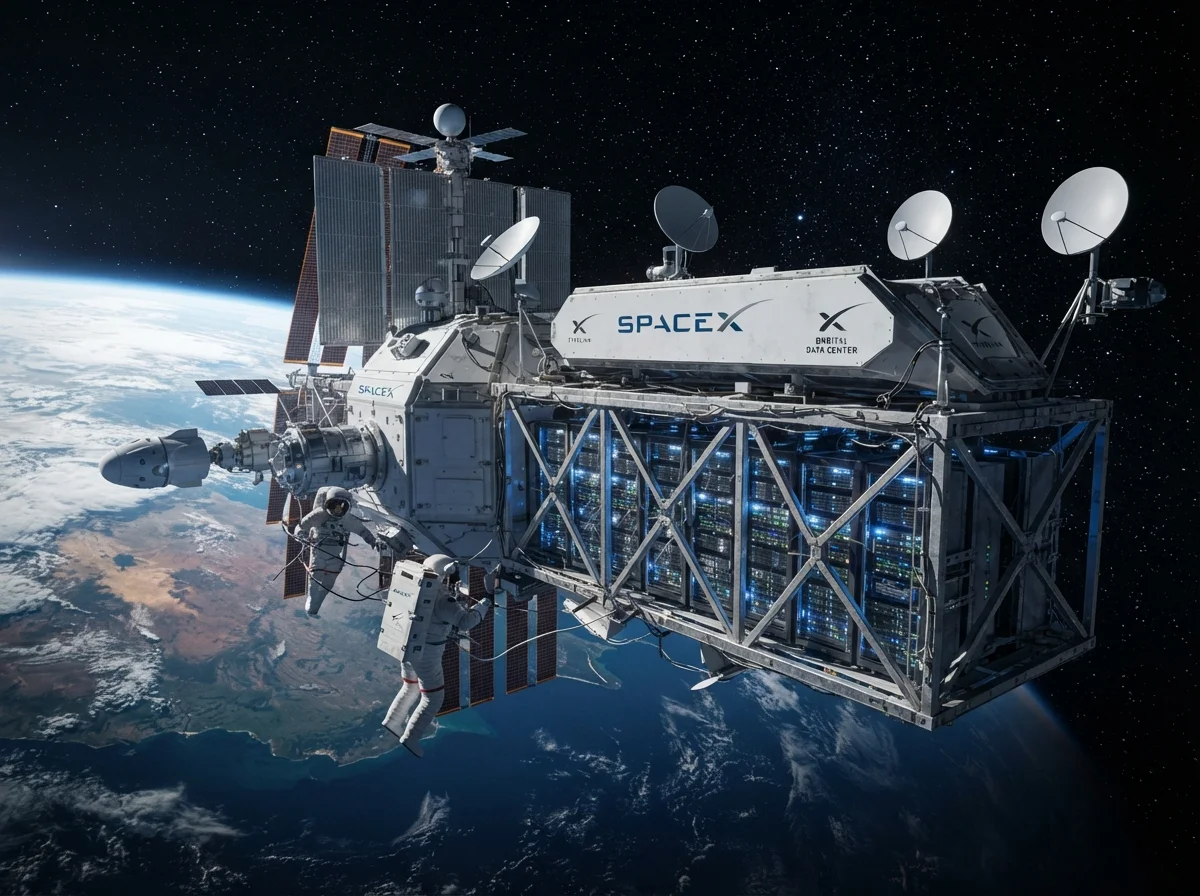
SpaceX has just received official permission from the U.S. Federal Communications Commission (FCC) to move forward with the Starmind project. This initiative allows the company to build and operate a constellation composed of up to a million satellites designed specifically to function as data processing centers outside of Earth.
Unlike conventional models based only on the Earth's surface, these orbital devices would serve as floating servers capable of sustaining heavy operations. The central goal of this move is to provide the enormous computational capacity needed to power complex artificial intelligence algorithms, using the solar abundance found in the space vacuum as the main electrical power source to keep the systems active.
The end of electrical bottlenecks in AI computing
This transition seeks to solve severe physical limitations faced by traditional data centers installed on solid ground. Currently, training large language models generates significant bottlenecks due to the extreme need for constant electricity and sophisticated thermal cooling systems that can be limited by local geography.
Moving this structure into the cosmos is like creating digital factories where the "fuel"—in this case, sunlight—is more accessible without terrestrial climatic or geographic restrictions. This strategy allows for a drastic scaling of available processing power while relieving pressure on domestic and corporate artificial neural networks operated in urban centers around the globe.
Logistics schedule and technological dependencies
Although the governmental approval represents an important green light, it does not guarantee immediate full operation; the license requires rigorous goals divided into chronological stages. The company must begin launches by November 2031, with the technical objective of placing at least 100,000 units into functional orbit around November 2035.
To meet these deadlines, all logistics depend directly on the advancements in the development of the Starship rocket, which is responsible for transporting this massive space cargo. The plan foresees reaching half of the total authorized capacity only in November 2038. Each satellite will function as a dedicated extension of the global infrastructure, allowing data to be physically processed away from the Earth's surface before reaching the end-users.
Environmental limitations and space risks
The project also opens necessary debates regarding orbital sustainability. Critics point to three fundamental problems resulting from this unprecedented scale: the increase in atmospheric pollution caused by frequent heavy rocket launches, the sharp growth of debris—technically known as space junk—and the possible detrimental interference with scientific observations made by traditional astronomers using terrestrial or smaller space telescopes.
Despite these technical hurdles, the authorization marks a definitive milestone in the technological transition where space becomes the new ground for the most powerful digital servers in human history. For now, it is worth tracking the technical progress of large-scale launch vehicles as a real indicator of the exact date when this space "cloud" will begin to dictate the pace of global technological advances outside of Earth.