Leak reveals Intel Razor Lake-AX design with integrated memory
Por Arthur Bittencourt ·
Revealed prototype indicates new Intel strategy
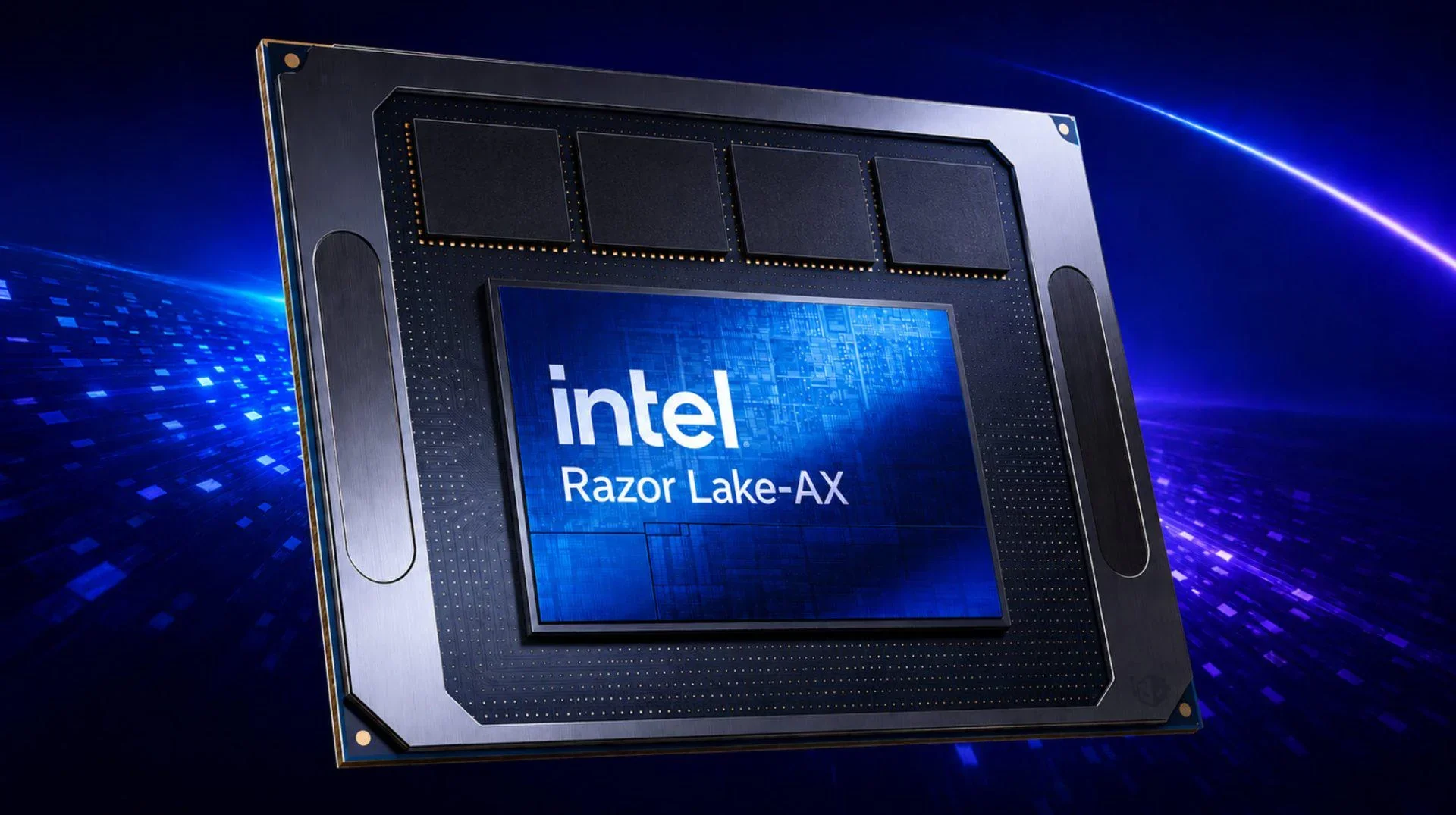
Recently, a photograph circulating on the internet brought important details to light about the future of Intel processors for notebooks and compact devices. The image shows a prototype of the Razor Lake-AX line, which promises to be the manufacturer's main response to the advancement of AMD's Halo APUs.
The core point of this discovery is the component's physical structure, which appears to reserve space for four memory modules integrated directly into the chip package itself. This change signals a clear effort by the brand to deliver high performance within increasingly thin and efficient chassis, where internal space is extremely limited.
How integrated memory technology works
This architecture is technically called memory on-package. Unlike the traditional model, where you insert RAM sticks into separate slots, here the components are installed very close to the main cores within a single physical enclosure. It's like having tools attached directly to your belt instead of stored in a backpack: everything becomes more accessible and faster.
By reducing the physical distance data needs to travel between the CPU and the memory, this design decreases the system's latency (response time). In this specific leak, it is expected that these spaces will be occupied by cutting-edge LPDDR5X memory, optimizing power consumption without sacrificing the speed needed for heavy tasks.
Practical impacts and comparison with the competition
The goal of this engineering is to allow compact devices to run games and complex artificial intelligence models smoothly. Rumors indicate that the capabilities of these systems can reach impressive levels, ranging between 32GB and up to 128GB of total capacity. This puts Intel in direct competition with AMD's solutions in the high-performance mobile segment.
An important strategic detail is that the manufacturer may opt to leave the final assembly of these memories in the hands of partner manufacturers (OEMs). This tactic aims to protect profit margins during periods of instability in semiconductor prices, allowing greater flexibility in the production of gaming notebooks and portable workstations.
Expectations and limitations for the coming years
Although not officially confirmed by the company, the suggested specifications point toward versions equipped with 16 or even 32 Xe3 cores. These processors should utilize architectures like Coyote Cove and Arctic Wolf, focusing on raw power efficiency, but likely without overclocking support, prioritizing thermal stability in compact designs.
The current forecast is that these components will only reach the market in the third quarter of 2027. Since everything is still in the realm of technical speculation based on discarded samples, interested users should wait for official announcements before planning significant hardware changes. For now, the leak serves as an indicator of the technological direction Intel intends to pursue.